Every business owner has a digital safety blanket. For most, it is the humble spreadsheet. It starts innocently enough. You need to track a few leads, manage some inventory, or keep an eye on your monthly outgoings. A quick grid in Excel or Google Sheets feels like the perfect solution. It is free, flexible, and you already know how to use it.
In the beginning, this works perfectly. You feel in control. You have your rows and your columns neatly organised. But as your business grows, that simple grid begins to morph. It grows more tabs. It gains complex formulas that only one person understands. Eventually, it becomes a sprawling, fragile monster that dictates how you spend your day.
At Myriad, we see this journey often. We help people move from manual chaos to streamlined systems. While spreadsheets are brilliant for quick calculations, they were never designed to be the engine of a growing company. If you feel like you are spending more time managing your data than actually using it, your spreadsheets have stopped being a tool and have started being a barrier.
The hidden cost of the manual grind
When you are deep in the daily operations of a small business, it is hard to see how much time is leaking away. You might spend twenty minutes here updating a client’s status or ten minutes there copying data from an email into a tracker. These moments seem small. Individually, they are barely a blip on your radar.
However, these minutes accumulate into hours every single week. This is what we call the manual grind. It is work about work. It does not add value to your customers or bring in new revenue. It simply maintains the status quo. When your business relies on manual entry, your growth is capped by the number of hours you can spend staring at a screen.
Small business automation is often misunderstood as something only large corporations need. In reality, it is the smaller teams that benefit the most. By removing the repetitive tasks that plague manual spreadsheets, you reclaim the headspace needed to actually lead your business.
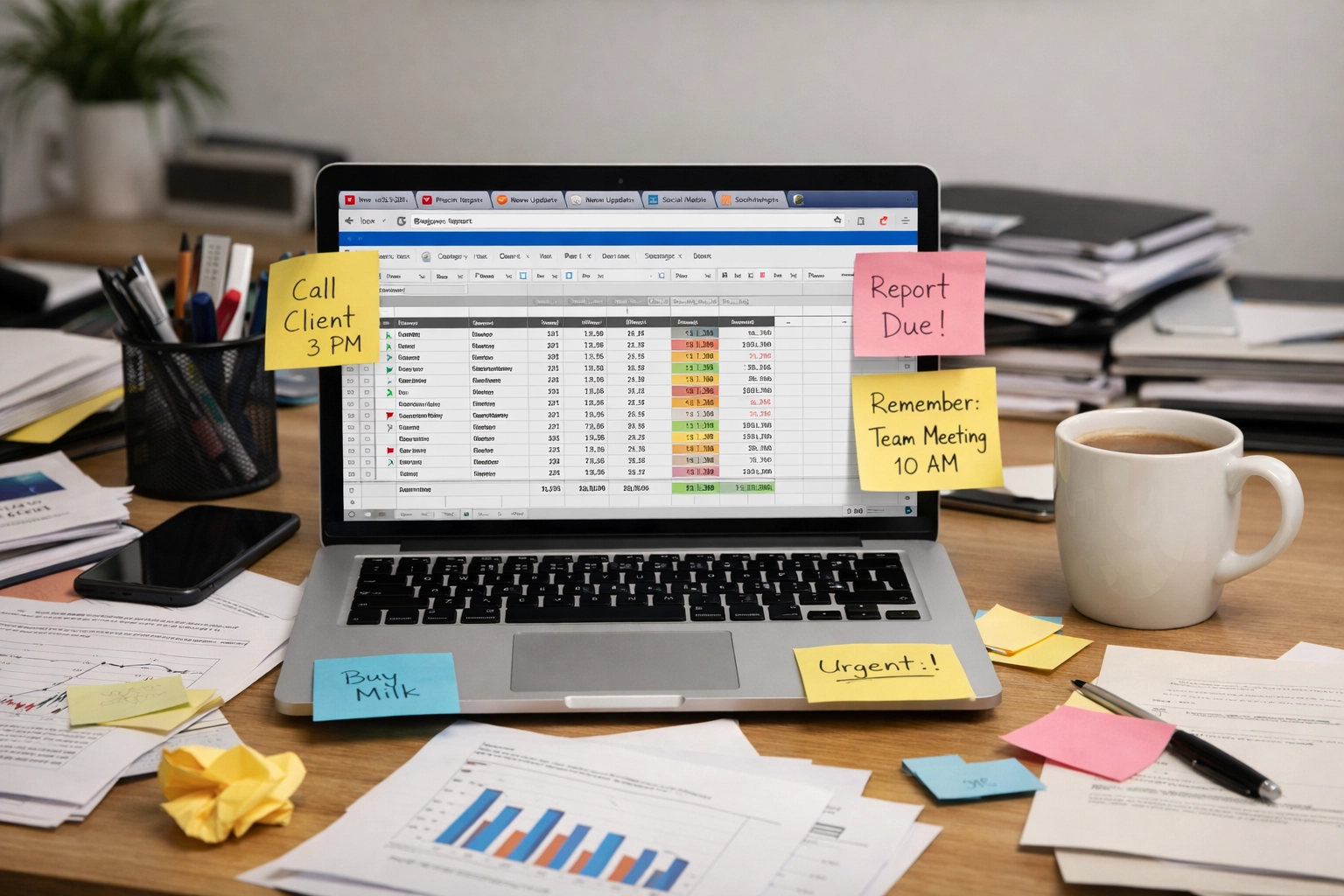
The myth of the single source of truth
A major issue with spreadsheets is that they rarely stay “single” for long. As soon as you have more than one person working on a project, the versions start to multiply. Someone saves a copy to their desktop to work offline. Another person creates a “Final_V2” version. Before you know it, you have three different files with three different sets of numbers.
This creates a massive lack of clarity. If you cannot look at one screen and know exactly where a project stands, you are flying blind. You end up making decisions based on outdated information. Perhaps a lead was followed up yesterday, but it was not updated in the master sheet yet. Or maybe a price was changed in one tab but not the other three that reference it.
Business process automation consulting focuses on creating a unified flow. Instead of data sitting in a static file, it moves through a system. When a client interacts with you, the system updates everywhere at once. No more second-guessing which file is the most recent.
Why errors are almost inevitable
Research suggests that up to 88% of spreadsheets contain errors. That is a staggering number. In a business context, a broken formula or a typo in a cell is not just a minor annoyance. It can lead to financial discrepancies, missed opportunities, and damaged reputations.
Humans are not designed for perfect, repetitive data entry. We get tired. We get distracted by a phone call or a knock at the door. We hit the wrong key. In a spreadsheet, one tiny mistake can ripple through every calculation, often without anyone noticing until it is too late.
When you move toward crm automations, you remove the human element from the boring stuff. Systems do not get tired. They do not accidentally delete a formula because they were trying to format a cell. They follow the rules you set for them, every single time, with total precision.
The physical limits of the grid
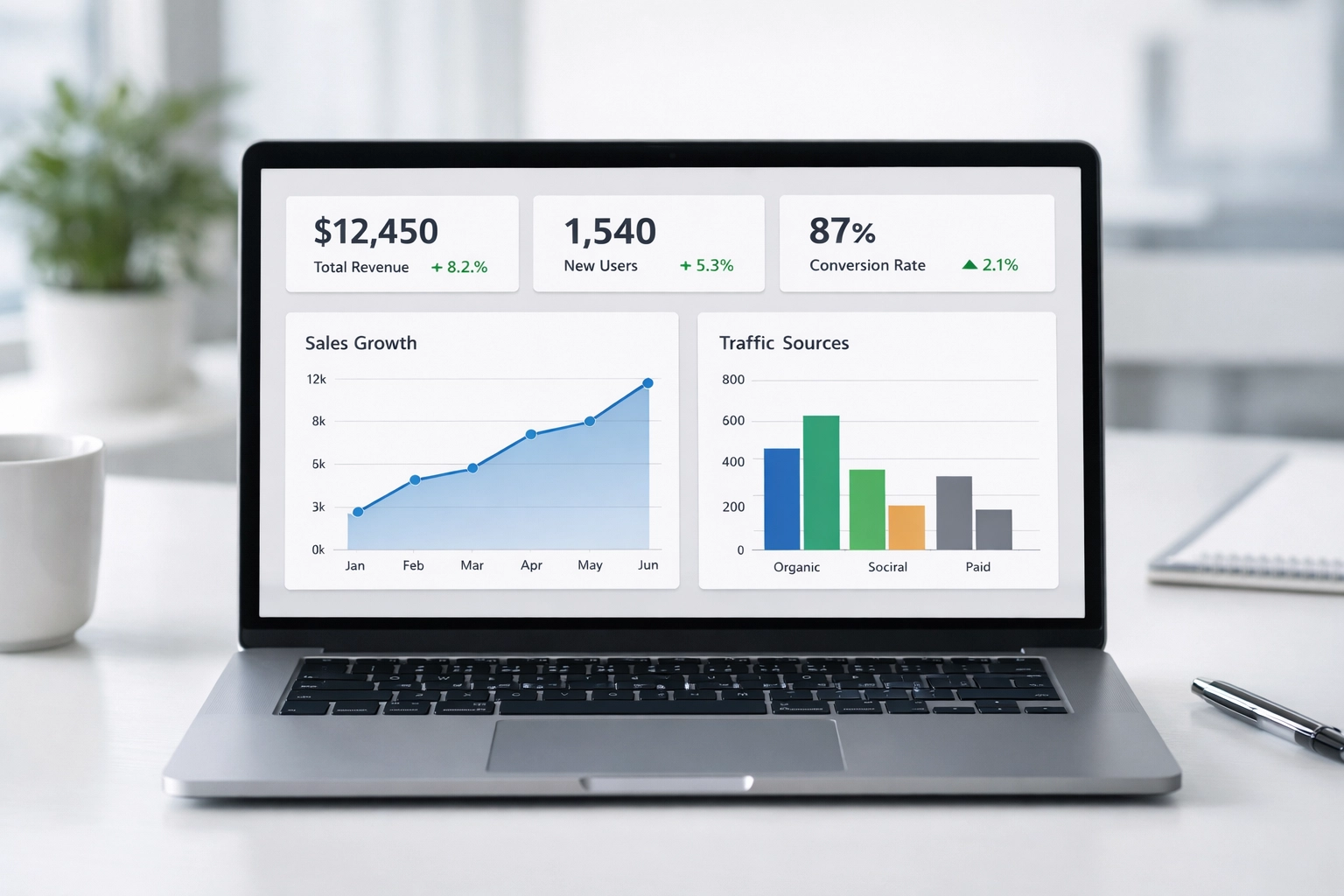
There is also a technical wall that every spreadsheet eventually hits. As the file size grows, the performance drops. You might find yourself waiting several seconds for a sheet to load or a calculation to finish. If you have ever experienced a spreadsheet crashing just as you were about to save, you know the frustration.
Spreadsheets also have hard limits on how much data they can hold. While a million rows sounds like a lot, a growing business can reach that faster than you think. More importantly, spreadsheets are terrible at connecting different types of information. They are “flat.” They struggle to show complex relationships, like how a specific marketing campaign led to a specific set of customer behaviours over six months.
Modern business systems are built on databases, not grids. They are designed to handle millions of data points without breaking a sweat. They allow you to see the big picture without the lag.
Moving from friction to flow
The transition away from spreadsheets does not have to be a painful or overwhelming process. It is about identifying the friction points. Where are you repeating yourself? Where are you worried about things breaking?
This is where business process automation consulting makes a difference. We look at the “steampunk” mechanics of your business, the gears and levers that make things move, and we oil them. We replace the rusty manual parts with smooth, automated ones.
The goal is not to add more technology for the sake of it. In fact, the best automation often feels invisible. It is the email that sends itself. It is the invoice that generates when a project is marked as complete. It is the peace of mind that comes from knowing your data is accurate and up to date without you having to touch it.
Simplifying the journey ahead
If you feel overwhelmed by the thought of ditching your trackers, start small. You do not need to overhaul your entire operation by Friday. You just need to pick one process that causes the most headache and look at how to automate it.
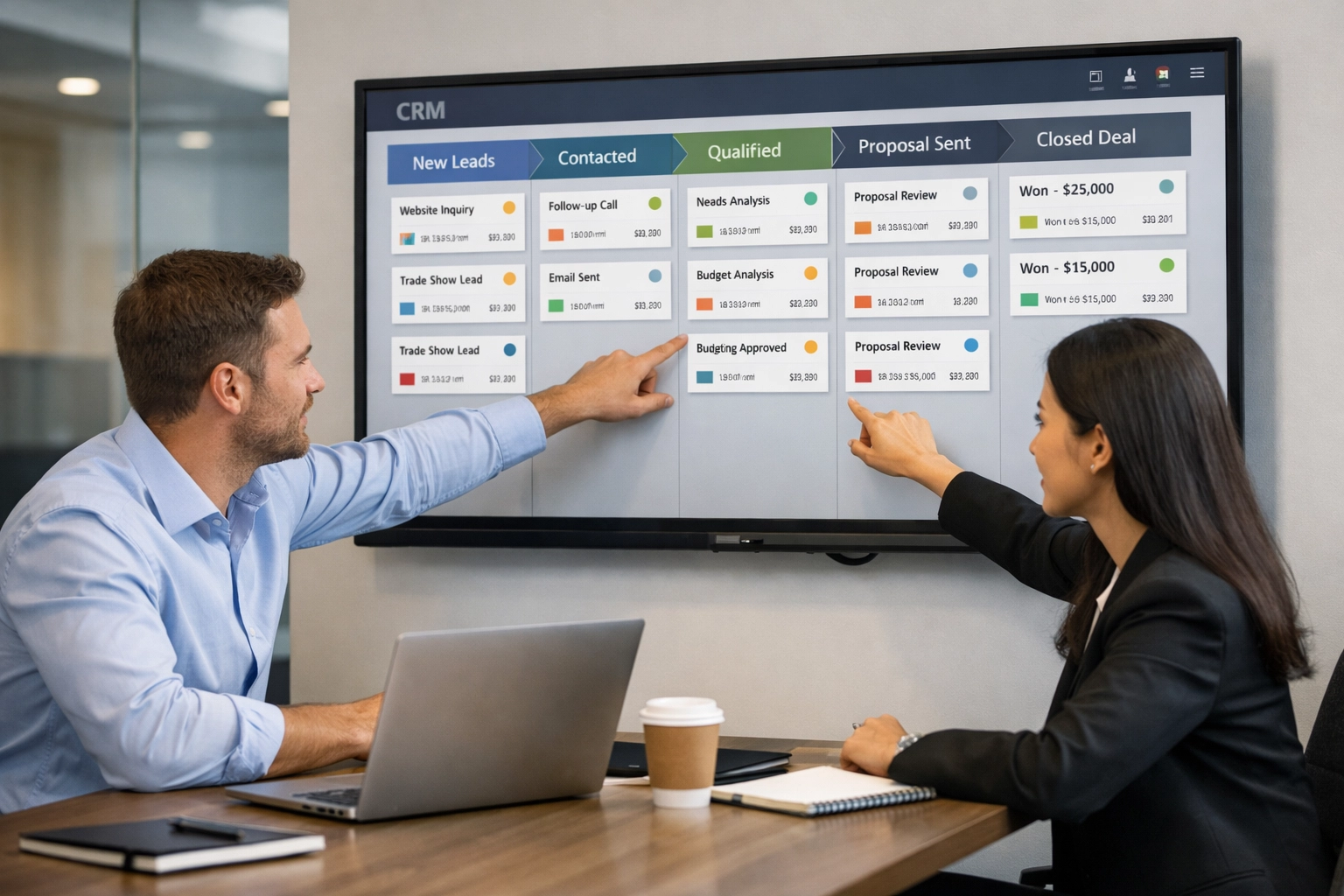
Often, the first step is simply centralising your customer information. Moving from a spreadsheet to a dedicated CRM is like moving from a shed into a custom-built workshop. Everything has its place, the tools are within reach, and there is room to grow. You can find more advice on how to start this transition in our resourceshub.
Automation is not about replacing the human touch; it is about freeing the humans to be more human. It lets you focus on the creative, strategic, and relational parts of your business that no machine can replicate.
Building a system that scales
As this is the first in our series on reclaiming your time, we want to leave you with a thought. Your business deserves a foundation that supports your ambition rather than one that limits it. Spreadsheets are a fantastic starting point, but they are a poor permanent home for a growing brand.
If you are curious about how your current systems are performing, you might find our free domain audit a useful place to check your digital health. It is one less thing to worry about while you plan your move toward a more automated future.
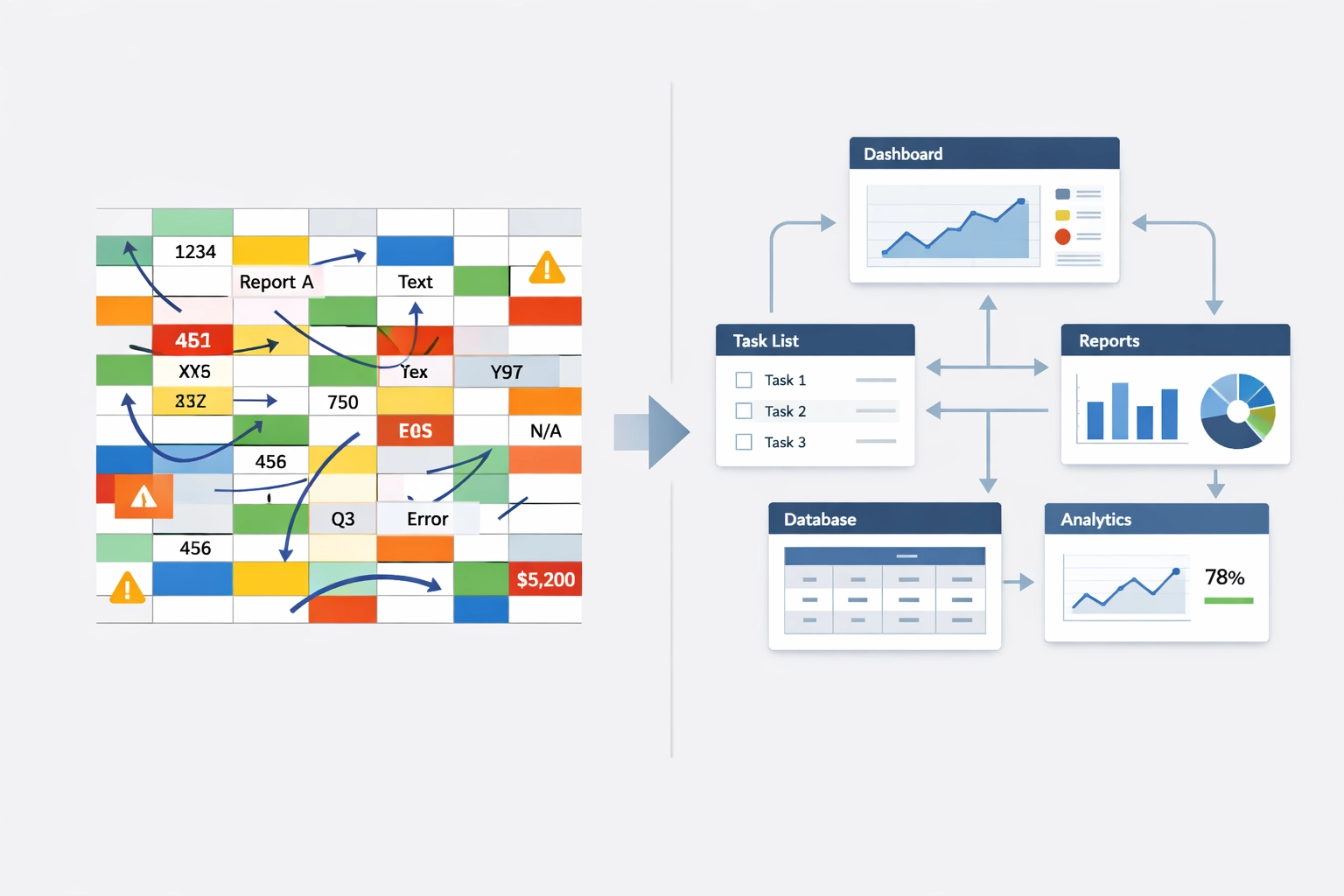
In the coming weeks, we will be diving deeper into the specific tools and workflows that can replace the spreadsheet struggle. We will look at how to connect your favourite apps, how to choose the right CRM, and why “simple” beats “complex” every single time.
For now, take a look at your busiest spreadsheet. Ask yourself: if this file disappeared tomorrow, would my business stop? If the answer is yes, it is time to build something more robust.